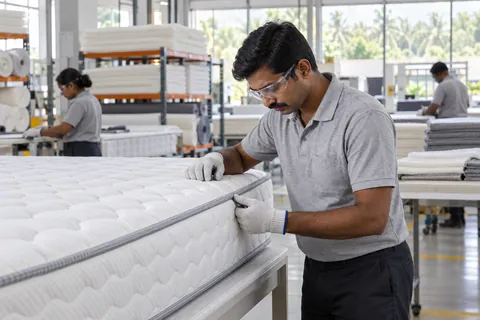

The National Classification of Occupations published through India’s National Career Service includes Mattress Maker (Spring) under upholsterers and related workers. The listed work includes activities such as padding and covering spring assemblies, preparing cover material, and using sewing or related equipment.
The exact job title, duties, educational requirements, working hours, salary, and benefits vary by employer and vacancy. Applicants should therefore read the specific job description before applying rather than assuming that every mattress factory worker position has the same requirements.
Types of Mattress Factory Worker Jobs
Mattress manufacturing facilities can have several types of production and support roles.
1. Mattress Factory Helper
A factory helper generally supports production workers with routine activities. Duties may include moving materials, preparing work areas, arranging components, assisting experienced workers, and keeping assigned areas organized.
The exact responsibilities depend on the production process and employer.
2. Mattress Production Worker
Production workers may be involved directly in assembling mattresses. Depending on the manufacturing method, this can include handling foam, fabric, padding, springs, or other components.
Some positions may require previous manufacturing experience, while entry-level vacancies may provide workplace training.
3. Mattress Maker
A mattress maker may perform more specialized production work. The National Classification of Occupations describes mattress-making work involving padding and covering spring assemblies and using sewing or related equipment.
Requirements can vary depending on whether the employer produces spring, foam, coir, or other types of mattresses.
4. Cutting and Fabric Worker
Some factories employ workers to cut fabric or other covering materials according to production requirements. The work may involve measuring, marking, cutting, and preparing materials for later assembly.
Experience with cutting tools or industrial equipment may be required for some positions.
5. Sewing or Upholstery Worker
Mattress covers may require stitching or other finishing work. Workers in these roles can operate sewing equipment or perform related upholstery tasks.
Employers may prefer applicants with previous sewing, tailoring, upholstery, or manufacturing experience for specialized positions.
6. Mattress Packing Worker
Packing workers help prepare finished mattresses for storage, transport, or dispatch. Duties may include checking the finished product, folding or wrapping where applicable, labeling, and arranging products for movement.
The exact packing process depends on the factory and product.
7. Quality Checking Assistant
Some manufacturing units have workers who assist with basic quality checks. They may inspect mattresses for visible defects, incorrect stitching, damaged covers, or other production issues according to workplace procedures.
Eligibility for Mattress Factory Worker Jobs
There is no single eligibility standard for all mattress factory jobs in India.
Requirements depend on the employer, position, production process, and level of responsibility. Entry-level helper positions may have simpler requirements than skilled sewing, machine-operation, or mattress-making roles.
A vacancy may specify requirements such as:
- Minimum age
- Educational qualification
- Previous work experience
- Relevant technical or vocational training
- Ability to perform listed physical duties
- Ability to follow workplace instructions
- Willingness to work assigned shifts
- Knowledge of particular machinery or tools
Applicants should use the vacancy's stated requirements as the main reference.
Educational Qualifications
Education requirements can vary significantly.
Some entry-level factory helper positions may accept candidates with basic schooling. Other employers may prefer or require Class 10 or Class 12 completion.
Specialized production roles can have additional requirements. For example, an employer looking for a sewing machine operator may ask for relevant experience, while a technical machinery position could require vocational training.
Applicants should not assume that completing a particular qualification automatically makes them eligible for every mattress factory job.
Skills That Can Be Useful
Several practical skills can help applicants in mattress manufacturing environments.
Basic Communication
Workers need to understand instructions from supervisors and communicate with other members of the production team.
Teamwork
Manufacturing is often organized around production stages. Workers may need to coordinate with people handling cutting, assembly, sewing, quality checking, packing, and dispatch.
Attention to Detail
Careful checking can help identify visible issues with stitching, fabric, dimensions, packaging, or finished products.
Manual Skills
Many production jobs involve handling materials and using hand tools or production equipment. The level of skill required depends on the position.
Safety Awareness
Factories can contain machinery, cutting tools, moving materials, electrical equipment, and other workplace hazards. Workers should follow the employer's safety instructions and use required protective equipment.
Physical Work
Some positions can involve standing, walking, lifting, carrying, bending, or repetitive activities. Applicants should review the physical requirements mentioned in the vacancy before applying.
Where Applicants Can Search for Jobs
Mattress manufacturing jobs can be advertised through company career pages, employment websites, recruitment agencies, local employment channels, and government-supported employment services.
The National Career Service (NCS) provides a Government of India platform where jobseekers can search for employment opportunities using job-related keywords and locations. The platform also lists manufacturing among its employment sectors.
Useful search terms can include:
- Mattress Factory Worker
- Mattress Factory Helper
- Mattress Production Worker
- Mattress Maker
- Mattress Packing Worker
- Foam Factory Worker
- Upholstery Worker
- Sewing Machine Operator
- Production Helper
- Manufacturing Helper
Search results can vary depending on location and the vacancies available when you search.
Recruitment and Application Process
The recruitment process differs from one employer to another. A typical process may include the following steps.
Step 1: Find a Suitable Vacancy
Search job portals, company websites, employment services, or other legitimate recruitment channels.
NCS allows jobseekers to search for jobs by entering relevant job terms and locations.
Step 2: Read the Job Description
Before applying, check:
- Job title
- Factory location
- Educational qualification
- Experience requirement
- Main duties
- Working hours or shifts
- Salary or wage information, if provided
- Employment type
- Documents required
- Application instructions
This helps ensure that the position matches your qualifications and expectations.
Step 3: Prepare Your Resume
For an entry-level role, a simple resume can include your contact details, education, previous employment, relevant skills, and training.
Applicants with manufacturing, sewing, upholstery, packing, or machine-operation experience should mention relevant experience accurately.
Step 4: Submit the Application
Use the application method specified by the employer. This may be an online application, company career page, recruitment platform, email, or another stated method.
Step 5: Employer Contact
If your application meets the employer's requirements, the employer may contact you for the next stage.
An application or employer contact does not guarantee selection or employment.
Selection Stages
There is no universal selection process for mattress factory worker jobs.
Depending on the employer and position, applicants may go through:
- Application or resume screening
- Telephone discussion
- Personal interview
- Practical or skill assessment
- Document verification
- Additional checks required by the employer
- Final selection and joining formalities
A skilled position involving sewing, machine operation, upholstery, or mattress making may include a practical assessment. A basic helper position may have a simpler recruitment process.
Applicants should follow the actual instructions provided by the employer.
Salary and Benefits
There is no single salary that accurately applies to all mattress factory worker jobs in India.
Compensation can vary based on:
- Location
- Employer
- Job responsibilities
- Experience
- Skill level
- Employment type
- Working hours and shifts
- Applicable employment terms
Some vacancies may clearly state the offered salary or wage. Others may provide compensation information during the recruitment process.
Benefits also vary between employers. Depending on the employment arrangement, a worker may receive certain statutory benefits, leave, overtime arrangements, transportation, meals, or other facilities. These should not be assumed unless they are specifically stated by the employer.
Before accepting a job, applicants should confirm the offered pay, working hours, overtime terms, deductions, leave arrangements, and any benefits included in the employment terms.
Required Documents
Document requirements depend on the employer and vacancy.
Applicants may be asked to provide some of the following:
- Resume or application form
- Identity proof
- Address information
- Educational certificates
- Previous employment details
- Experience certificate, where applicable
- Skill or training certificates, where applicable
- Passport-size photographs
- Bank details for salary processing, if required
- Other documents specifically requested by the employer
Applicants should provide only the documents reasonably requested for the recruitment process and should verify the employer before sharing sensitive personal information.
Applicant Tips
Check the Actual Job Duties
A vacancy titled "factory worker" can cover different responsibilities. Read the job description carefully to understand whether the role involves production, packing, sewing, machine operation, or general assistance.
Keep Your Information Accurate
Do not claim experience, qualifications, or technical skills that you do not have.
Ask About Working Conditions
Before accepting an offer, ask about shift timings, weekly working arrangements, overtime, workplace location, and the physical requirements of the position.
Confirm Salary and Deductions
Make sure you understand the offered salary or wage and any applicable deductions before joining.
Follow Safety Procedures
Manufacturing environments may involve machinery and tools. Follow workplace safety instructions and use protective equipment when required.
Be Careful With Recruitment Fees
The National Career Service states that its services are free of cost and warns jobseekers about people or organizations falsely claiming an association with NCS. It advises jobseekers not to pay fees to employers and to verify information through official channels.
Applicants should be cautious about requests for money in exchange for guaranteed selection, interviews, appointment letters, or employment.
Verify the Employer
Check the company name, factory location, job responsibilities, and contact information before sharing documents or accepting an offer.
Frequently Asked Questions
What does a mattress factory worker do?
A mattress factory worker can perform production, assembly, material handling, sewing, upholstery, quality checking, packing, or other manufacturing support activities. Duties depend on the position.
Can freshers apply for mattress factory jobs?
Some entry-level positions may accept freshers, while other vacancies may require previous manufacturing or related experience. The employer determines the requirement.
What qualification is required?
There is no universal educational qualification. Some helper roles may accept basic schooling, while other positions may require Class 10, Class 12, vocational training, or relevant experience.
Is experience required?
Not for every position. Entry-level jobs may consider applicants without previous factory experience, while skilled positions can require relevant experience.
What skills are useful?
Basic communication, teamwork, attention to detail, manual skills, safety awareness, and the ability to follow instructions can be useful. Specialized positions may require additional technical skills.
How can I find mattress factory jobs?
You can search company websites, employment platforms, recruitment channels, and the National Career Service. NCS provides job-search facilities and allows users to search using job-related terms and locations.
What documents may be required?
Depending on the vacancy, employers may request identity documents, educational certificates, a resume, photographs, previous employment details, or relevant skill certificates.
What is the salary for mattress factory workers?
There is no universal salary. Compensation varies according to the employer, location, position, experience, and employment terms. Applicants should check the specific vacancy for the actual offer.
Are benefits provided?
Benefits vary by employer and employment arrangement. Applicants should confirm any statutory benefits, leave, overtime, transportation, meals, or other facilities directly with the employer.
Does applying guarantee a job?
No. Applying for a vacancy does not guarantee an interview, selection, salary, or employment. The employer makes the final recruitment decision according to its requirements and selection process.
Conclusion
Mattress factory worker jobs in India can cover several types of manufacturing and support work, including production assistance, mattress making, sewing, upholstery, packing, material handling, and quality checking. The duties and requirements can differ significantly between employers and individual vacancies.
Applicants should check the specific job description for educational requirements, experience, location, working hours, physical requirements, salary, benefits, documents, and selection procedures before applying.
Those looking for manufacturing opportunities can search company career pages, employment platforms, recruitment services, and the National Career Service. NCS provides job-search facilities for jobseekers and includes manufacturing among the sectors available on its platform.
Applicants should also verify employers carefully and avoid recruitment offers that promise guaranteed jobs or selection in exchange for payment. NCS specifically states that its services are free of cost and warns users about fraudulent communications.
Most importantly, the information in any job advertisement should be treated as specific to that vacancy. Salary, eligibility, benefits, working conditions, and selection procedures can vary, so applicants should confirm the actual employment terms directly with the relevant employer before making a decision.