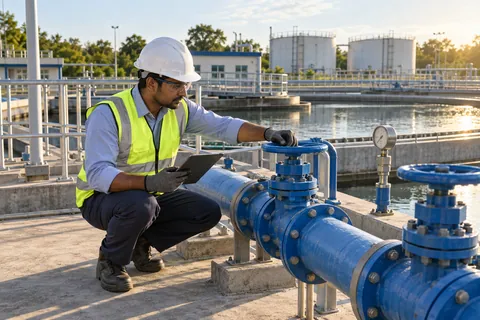
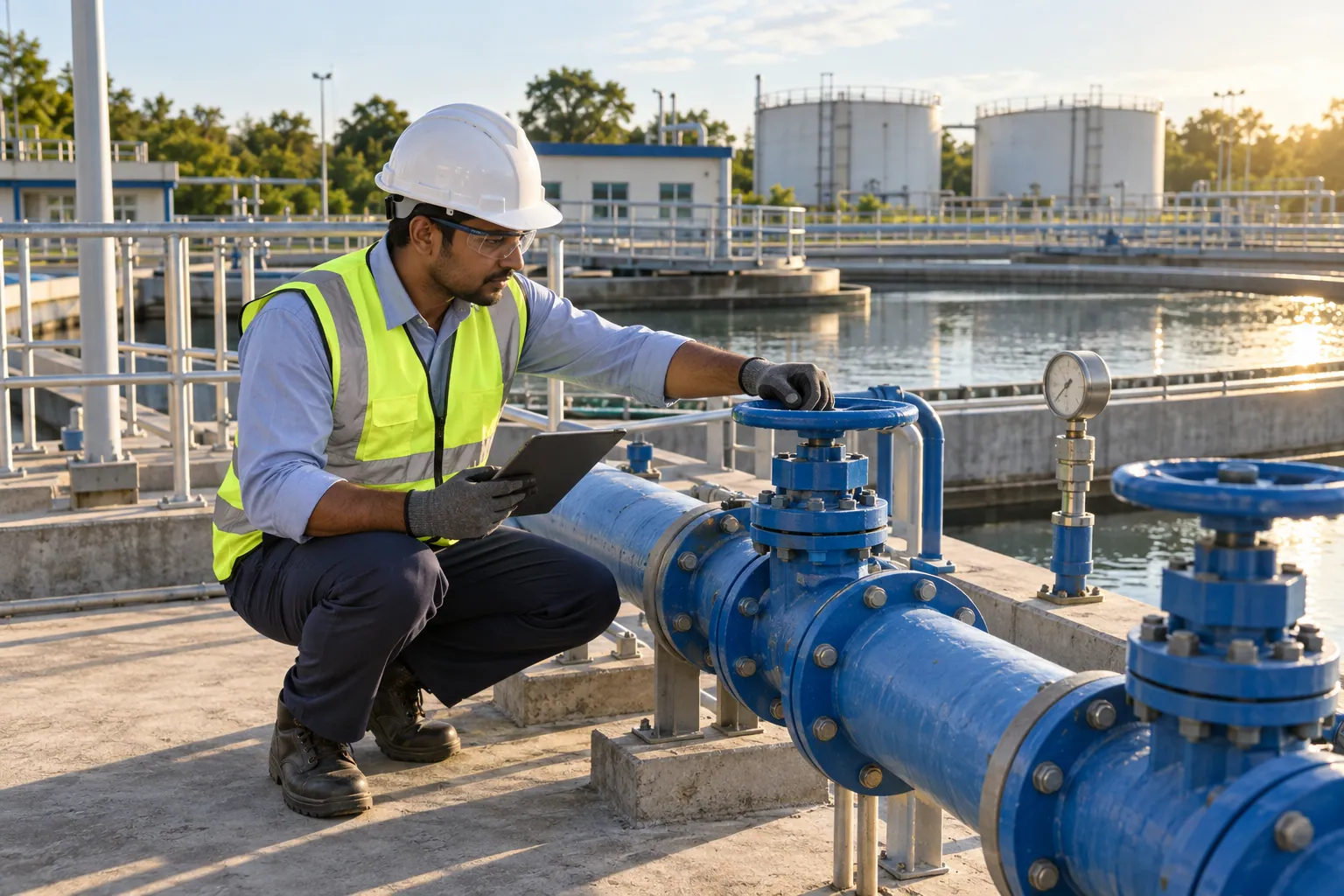
Jobs in this area can be found in government departments, local bodies, water utilities, infrastructure projects, private contractors, plumbing companies, treatment facilities, and other organizations involved in water management. Job titles and requirements vary considerably, so applicants should always check the specific vacancy before applying.
The National Qualification Register (NQR), maintained under the Government of India, includes recognized qualifications related to plumbing, water distribution, pump operation, and water-management systems. Its database also shows that different water-related occupations can have different education and experience requirements.
What Are Water Supply Jobs?
Water supply jobs involve activities connected with the collection, treatment, storage, distribution, installation, operation, and maintenance of water systems.
Depending on the position, a worker may:
- Install or repair water pipelines
- Operate pumps and related equipment
- Maintain water distribution systems
- Inspect plumbing connections
- Monitor water supply facilities
- Assist with water-quality monitoring
- Maintain tanks and storage systems
- Repair leaks and damaged components
- Maintain tools and equipment
- Record operational information
- Follow health and safety procedures
The work can range from practical field activities to technical operation of pumps, treatment equipment, electrical systems, and distribution infrastructure.
For example, the NQR describes a Water Pump Operator as responsible for installing, operating, and maintaining pumps as well as supporting water supply, distribution, and wastewater treatment systems.
Types of Water Supply Jobs in India
There is no single occupation called a "water supply worker." Several different roles can be associated with water supply and distribution.
1. Plumber
Plumbers install and maintain water supply systems, drainage systems, sanitary fittings, fixtures, and other plumbing systems.
The NQR's Plumber-General qualification specifically includes installation of water supply systems and maintenance of domestic plumbing systems. One listed eligibility route is Class 10 with an NTC, NAC, or CITS qualification, although other routes are also listed.
2. Assistant Plumber
An assistant plumber generally supports a plumber with installation and repair work. Tasks can include preparing tools, clearing work areas, cutting and bending pipes, and assisting with fittings.
The NQR lists a route for candidates who have passed Class 10 with no previous experience for its Assistant Plumber-General qualification. Other eligibility routes are also available.
3. Water Pump Operator
Water pump operators work with pumping equipment used in water supply and distribution systems. Their duties can include operating and maintaining pumps, water distribution equipment, and related machinery.
The NQR lists several possible eligibility routes for this occupation, including Class 12 without experience and Class 10 combined with relevant training or experience.
4. Water Distribution Operator
A water distribution operator may monitor and control water-system facilities and equipment. Depending on the role, responsibilities can include regulating water supply, operating pumps, monitoring water quality, and maintaining related systems.
The NQR describes a Technician-Water Distribution System qualification that covers water distribution, pumps, water-quality monitoring, and related maintenance activities.
5. Water Distribution or Jal Vitaran Worker
Water-distribution roles can combine plumbing, maintenance, basic electrical work, community coordination, and water-system operations.
The NQR includes a Jal Vitaran Sanchaalak (Water Distribution Operator) qualification associated with activities such as plumbing installation, maintenance, repair, pump operation, and water-quality surveys.
6. Plumbing or Water-System Supervisor
Supervisory positions generally involve planning work, allocating tasks, checking completed work, and coordinating workers.
Such positions normally have higher experience or qualification requirements than entry-level plumbing or maintenance roles. The NQR's Plumbing Supervisor qualification, for example, lists routes involving a diploma and experience, or Class 8/12 education combined with relevant experience and training.
Eligibility for Water Supply Jobs
Eligibility depends on the exact job.
Some entry-level plumbing-related roles may accept candidates with basic education, while technical water-system positions can require ITI, vocational training, experience, or higher education.
Possible requirements include:
- Class 8, 10, or 12 education
- ITI or trade certification
- NTC, NAC, or CITS certification
- Relevant vocational qualification
- Previous plumbing or maintenance experience
- Pump-operation experience
- Technical knowledge
- Physical ability to perform field duties
- Additional requirements specified by the employer
For example, the NQR lists Class 10 with no experience as one eligibility route for its Assistant Plumber-General qualification.
For Water Pump Operator, the NQR lists Class 10 with relevant training or experience among its routes.
These qualification frameworks should not be treated as universal recruitment rules. An individual employer or government vacancy may specify different conditions.
Qualifications and Training
Candidates interested in water supply work can consider plumbing, mechanical, electrical, pump-operation, and water-management training depending on their desired role.
Relevant training may include:
- Plumbing
- Pipe fitting
- Pump operation
- Water distribution
- Water treatment
- Electrical maintenance
- Mechanical maintenance
- Industrial training
- Apprenticeship or workplace training
The NQR's water-distribution qualification includes training modules covering plumbing and water-management systems, troubleshooting, water-quality monitoring, pumps, machinery, solar systems, and electrical panels.
The appropriate qualification depends on the position. Someone applying for a basic plumbing role may not need the same training as someone operating pumps or maintaining a treatment facility.
Skills Needed for Water Supply Work
Plumbing and Pipe-Fitting Skills
Workers may need to understand pipes, fittings, valves, joints, measurements, and installation procedures.
Pump and Equipment Knowledge
Pump operators need to understand the equipment they operate and follow appropriate operating and maintenance procedures.
Basic Electrical Knowledge
Some water systems use electrical panels, pumps, motors, and other electrical equipment. Certain roles may therefore require relevant electrical knowledge.
Maintenance Skills
Water infrastructure requires regular inspection and maintenance. Workers may need to identify leaks, equipment problems, damaged pipes, or other faults.
Water-Quality Awareness
Certain roles involve monitoring water quality or supporting water-quality surveys. The exact responsibilities depend on the position.
Safety Awareness
Workers may operate machinery, work around electrical equipment, enter work areas involving pipelines or tanks, and perform outdoor or field duties. Following applicable workplace safety procedures is important.
Where Can Water Supply Workers Work?
Potential workplaces can include:
- Municipal or local government organizations
- Water supply departments
- Public infrastructure projects
- Water treatment facilities
- Plumbing contractors
- Construction companies
- Private water-management companies
- Industrial facilities
- Housing and commercial projects
- Infrastructure maintenance contractors
The availability of positions varies by location, project, organization, and recruitment requirements.
The Jal Jeevan Mission is a government programme concerned with rural drinking-water supply, and its official guidelines include provisions relating to programmes and capacity building for water-related roles.
However, the existence of a government programme does not mean that a particular job is currently available in every location.
How to Find Water Supply Jobs in India
Applicants can use several routes to search for opportunities.
Government Recruitment Websites
Government departments, municipalities, public bodies, and other organizations generally publish recruitment information through their official channels.
Candidates should check the recruiting organization's official website and read the complete notification.
National Career Service
The National Career Service is a government employment platform that can be used to search for jobs and access career-related services.
Applicants can search using terms such as "plumber," "water supply," "pump operator," "maintenance technician," or other relevant job titles.
Company Career Pages
Private infrastructure companies, contractors, plumbing businesses, and water-treatment organizations may advertise positions through their official websites.
Apprenticeship and Skill Training
Candidates can also consider relevant training or apprenticeship opportunities to develop practical skills before applying for more specialized roles.
Recruitment and Application Process
The application process depends on the organization.
A typical recruitment process may include the following:
1. Find the Vacancy
Search for a position matching your education, skills, experience, and preferred location.
2. Read the Eligibility Conditions
Check education, age, experience, technical qualifications, and any other conditions.
3. Prepare the Application
Complete the application form accurately and provide the requested information.
4. Upload or Submit Documents
Depending on the recruitment system, applicants may need to upload certificates, photographs, identification documents, or other records.
5. Complete Selection Tests
Some employers may conduct written examinations, technical tests, practical assessments, or interviews.
6. Document Verification
Shortlisted candidates may have their educational and other documents checked.
7. Medical or Other Checks
Some positions may include medical or physical requirements, depending on the employer and nature of the work.
8. Final Recruitment Decision
Candidates who complete the required recruitment process may receive an employment or training offer according to the applicable rules. Applying does not guarantee selection.
Selection Stages
Water supply recruitment does not follow one universal selection process.
Depending on the vacancy, selection can include:
- Application screening
- Written examination
- Technical examination
- Practical or trade test
- Interview
- Experience verification
- Document verification
- Medical examination
- Other employer-specific assessments
A private plumbing contractor may select candidates through an interview and practical assessment, while a government organization may use a formal examination and document-verification process.
Applicants should follow the exact selection procedure stated in the vacancy notification.
Salary and Benefits
There is no single salary applicable to all water supply jobs in India.
Compensation can vary according to:
- Employer
- Location
- Job title
- Technical qualification
- Experience
- Skill level
- Employment type
- Working hours
- Contract conditions
- Responsibilities
Government positions generally follow the applicable rules and pay structure specified for the particular post. Private employers can have different compensation arrangements.
Benefits also vary. Depending on the employment arrangement, a position may provide facilities such as leave, insurance, provident-fund-related benefits, overtime payments, transportation, or other benefits. These should only be considered available when stated in the vacancy or employment agreement.
Applicants should check the written offer or contract for exact salary, working hours, deductions, benefits, and other conditions.
Documents Commonly Required
The required documents depend on the employer and vacancy. Applicants may be asked for:
- Educational certificates
- Class 8, 10, or 12 certificate
- ITI or vocational certificate
- NTC, NAC, or CITS certificate, where applicable
- Experience certificate
- Identity proof
- Address proof
- Passport-size photographs
- Category certificate, where applicable
- Disability certificate, where applicable
- Bank information for employment-related payments, where required
- Other documents listed in the recruitment notification
Candidates should submit documents through official recruitment channels and should be cautious about providing sensitive information to unverified recruiters.
Tips for Water Supply Job Applicants
Read the complete vacancy. Check the job duties and eligibility instead of relying only on the job title.
Choose relevant training. Plumbing, pipe fitting, pump operation, electrical maintenance, or water-management training can be relevant to different positions.
Build practical skills. Employers may assess practical ability as well as educational qualifications.
Keep documents organized. Maintain clear copies of educational, technical, and experience certificates.
Verify recruitment information. Use official government websites or verified company channels when possible.
Understand employment conditions. Check salary, working hours, location, duties, overtime, and benefits before accepting an offer.
Be careful with recruitment fees. Do not assume that paying a fee guarantees a job or selection.
Follow safety procedures. Water supply work can involve machinery, electrical equipment, pipelines, chemicals, and field conditions.
Frequently Asked Questions
What qualification is required for water supply jobs?
There is no single qualification. Requirements can range from basic education for some entry-level roles to ITI, vocational training, experience, or higher qualifications for technical positions.
Can a 10th pass candidate work in water supply?
Yes, some recognized plumbing and water-related qualification pathways include Class 10 candidates. For example, the NQR lists Class 10 as one eligibility route for certain plumbing and pump-related occupations.
However, individual vacancies can have different requirements.
What does a water pump operator do?
A water pump operator can install, operate, and maintain pumps and related equipment used in water supply, distribution, and treatment systems. The exact duties depend on the position.
Is ITI required for water supply jobs?
Not for every position. Some roles accept candidates through other education or experience routes, while certain technical jobs may specifically require ITI or another qualification.
Can freshers apply for water supply jobs?
Some entry-level roles and training pathways accept candidates without previous experience. Other vacancies require experience. The individual recruitment notification determines eligibility.
Are water supply jobs only government jobs?
No. Water-related work is also carried out by private contractors, plumbing companies, infrastructure organizations, treatment facilities, construction businesses, and other employers.
How much does a water supply worker earn?
There is no universal salary. Pay depends on the job, employer, location, qualifications, experience, and employment terms. Applicants should use the specific vacancy or employment agreement for accurate pay information.
Are there career progression opportunities?
Progression depends on training, experience, qualifications, and available positions. Some recognized qualification pathways show progression from entry-level plumbing or distribution roles toward supervisory positions.
What documents should I keep ready?
Common documents can include educational certificates, technical qualifications, identity documents, photographs, and experience certificates where applicable. The actual list is determined by the vacancy.
Conclusion
Water supply work in India includes a variety of occupations covering plumbing, pipeline installation, pump operation, water distribution, maintenance, and related technical activities. The work can be carried out by government organizations, local bodies, private companies, contractors, infrastructure projects, and other employers.
Eligibility depends on the specific position. Some entry-level plumbing and water-related roles can accept candidates with basic education, while technical positions may require ITI, vocational qualifications, experience, or specialized training. Recognized qualification frameworks include roles such as Plumber-General, Water Pump Operator, Technician-Water Distribution System, and other water-management occupations.
Applicants should therefore avoid assuming that one qualification, salary, selection process, or benefit applies to every water supply job. Checking the official vacancy, verifying the recruiting organization, preparing the required documents, and understanding the employment terms can help candidates evaluate opportunities based on the actual requirements.
For anyone considering this field, developing relevant practical skills in plumbing, pipe fitting, pump operation, maintenance, or water-system management can be considered according to the type of role they want to pursue.