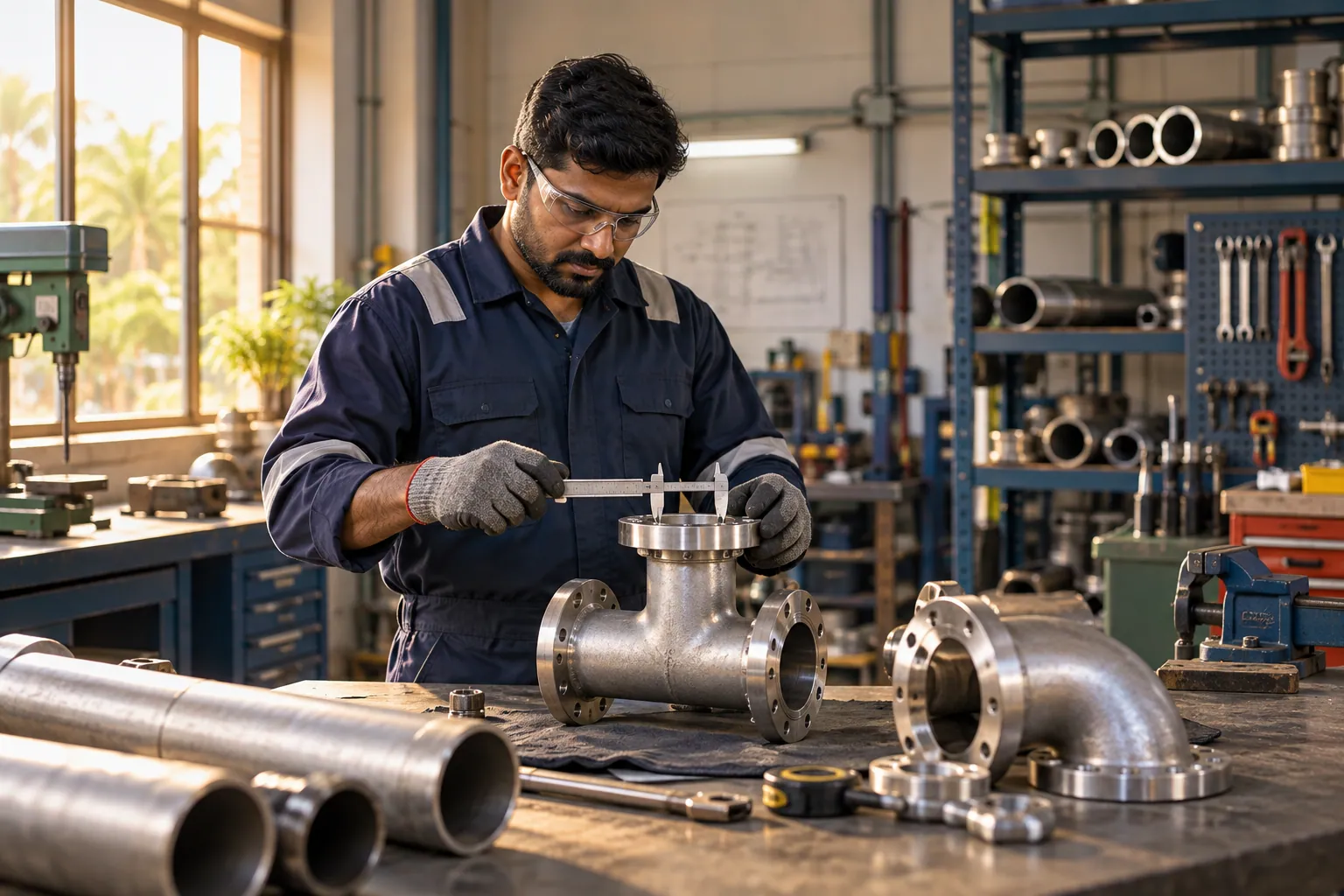
The exact requirements for these jobs vary by employer, workshop, dealership, vacancy, and level of responsibility. Some entry-level roles may accept candidates with basic education and practical training, while technical positions may require ITI qualifications, relevant experience, or specialized training.
The Directorate General of Training (DGT) officially lists Mechanic Motor Vehicle as an automotive trade. Its current training information states that the trade requires Class 10 with Science and Mathematics, or an equivalent vocational subject, and has a two-year training duration.
What Does a Car Mechanic Do?
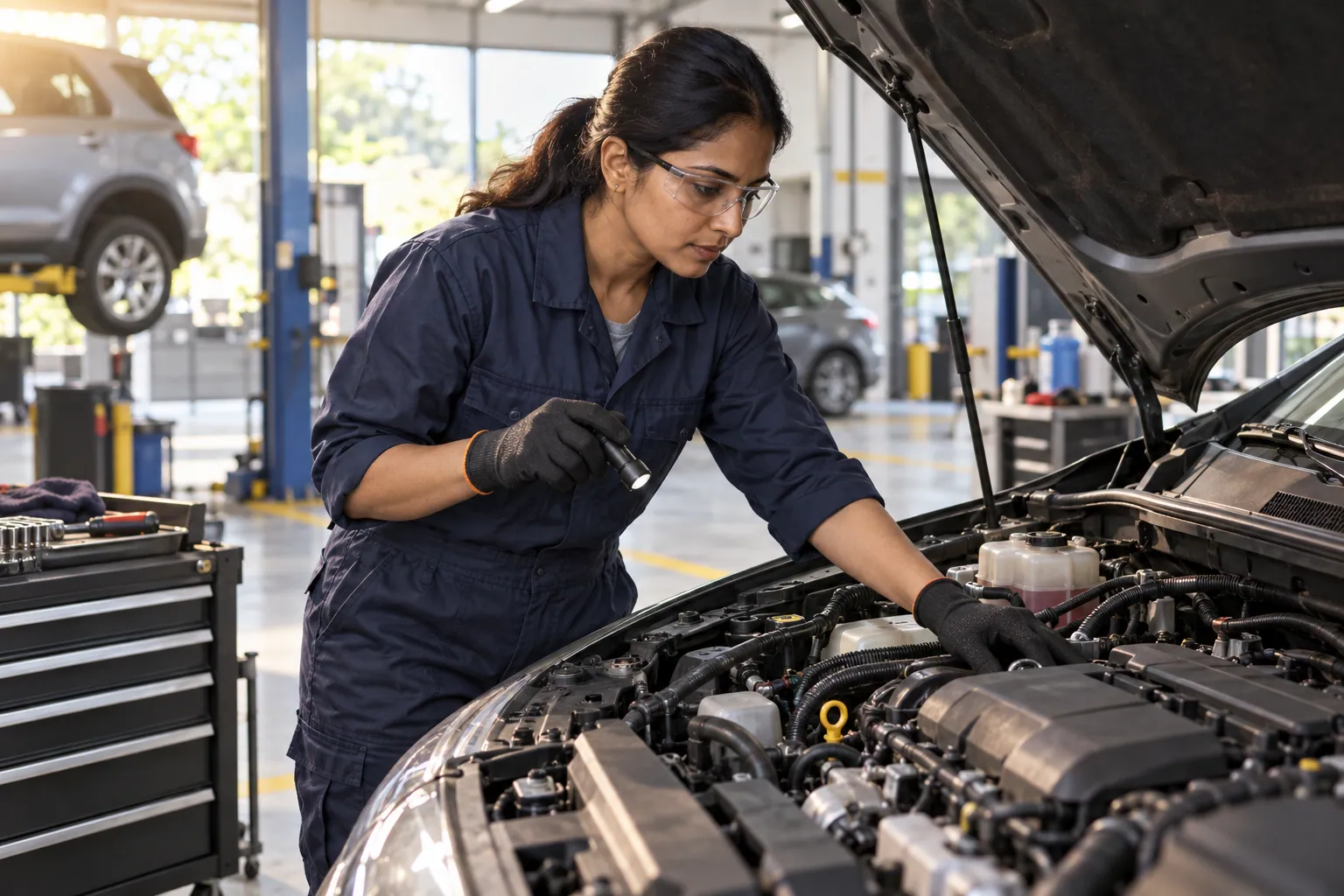
A car mechanic is generally responsible for inspecting, servicing, maintaining, and repairing vehicles. The exact responsibilities depend on the type of workshop and the job position.
Common duties may include:
- Inspecting vehicles to identify problems
- Performing routine servicing and maintenance
- Checking engine and mechanical components
- Replacing worn or damaged parts
- Checking brakes, suspension, steering, and other systems
- Diagnosing vehicle faults
- Using hand tools and workshop equipment
- Using electronic diagnostic equipment where required
- Checking vehicle fluids and other maintenance items
- Following workplace and vehicle-safety procedures
- Recording repair or service information
Modern vehicles contain mechanical, electronic, and computer-controlled systems. As a result, some technicians may need knowledge of electronic diagnostics in addition to traditional mechanical skills.
The National Qualification Register describes a four-wheeler service technician as someone responsible for routine servicing, maintenance, diagnosis, and repair of vehicles, including mechanical and electrical aggregates.
Types of Car Mechanic Jobs in India
The automotive sector includes several different job roles. Applicants should read the vacancy description carefully because similar job titles can involve different responsibilities.
1. Four-Wheeler Service Technician
A four-wheeler service technician works primarily on cars and other light vehicles. Responsibilities can include routine servicing, minor repairs, inspection, and assisting with diagnosis.
The National Qualification Register recognizes Four Wheeler Service Technician as an automotive technical service and repair role.
2. Mechanic Motor Vehicle
Mechanic Motor Vehicle is a formal DGT trade. The training covers automotive mechanical skills and provides a structured route into motor-vehicle maintenance and repair work. DGT currently lists the trade as a two-year course with Class 10 and Science and Mathematics or an equivalent vocational subject as the entry qualification.
3. Two-Wheeler Mechanic
Although this role focuses on motorcycles and scooters rather than cars, the automotive sector also has specialized training for two- and three-wheeler mechanics.
DGT lists Mechanic Two & Three Wheeler as a one-year automotive trade, with Class 10 and Science and Mathematics or an equivalent qualification as the entry requirement.
4. Auto Electrical Technician
Some technicians specialize in electrical and electronic systems. Their work can include diagnosing electrical faults and servicing vehicle electrical components.
This area can be particularly relevant for vehicles that use increasingly complex electronic systems.
5. Auto Body Repair Technician
Body repair is different from mechanical servicing. These workers may repair damaged body panels and other exterior components. DGT separately recognizes Mechanic Auto Body Repair as an automotive trade.
6. Electric and Hybrid Vehicle Technician
Electric and hybrid vehicles require knowledge of electrical and electronic systems in addition to relevant vehicle-service skills. The National Qualification Register includes an Electric Vehicle Service Technician qualification covering routine servicing, maintenance, and repair of electric and hybrid vehicles.
Eligibility for Car Mechanic Jobs
There is no single eligibility requirement for every car mechanic vacancy in India.
Employers may consider:
- Educational qualification
- ITI or vocational training
- Relevant technical certificates
- Practical experience
- Knowledge of vehicle systems
- Diagnostic skills
- Driving licence, where required for the position
- Ability to work with workshop tools and equipment
For formal DGT Mechanic Motor Vehicle training, the stated entry requirement is Class 10 with Science and Mathematics or a vocational subject in the same sector, or an equivalent qualification.
However, private workshops may use different recruitment criteria. Some may hire assistants or trainees based on practical ability and provide workplace training.
Qualifications and Training
One of the established training routes is Industrial Training Institute (ITI) education.
The DGT's Mechanic Motor Vehicle trade is listed under the Automotive sector and has a two-year duration.
Other relevant training routes can include:
- Mechanic Motor Vehicle
- Mechanic Diesel
- Mechanic Two & Three Wheeler
- Automotive electrical and electronics training
- Vehicle service technician qualifications
- Electric-vehicle service training
- Apprenticeship or workplace training
The appropriate qualification depends on the type of work a candidate wants to perform.
For example, the National Qualification Register lists a Four Wheeler Service Technician pathway with different eligibility combinations involving education, experience, and ITI training.
This means applicants should not assume that one qualification is mandatory for every automotive job.
Skills Needed for a Car Mechanic
Technical knowledge is only one part of automotive work. Mechanics also need practical and workplace skills.
Mechanical Skills
A mechanic should understand basic vehicle systems and how components work together. Depending on the role, this may include engines, transmission, brakes, suspension, steering, cooling systems, and other components.
Diagnostic Skills
Modern vehicles can require electronic diagnostic tools to identify faults. A technician may need to interpret diagnostic information and then inspect the relevant components.
Tool Handling
Mechanics regularly use hand tools, workshop equipment, measuring devices, and, depending on the job, electronic diagnostic equipment.
Problem-Solving
Vehicle problems can have several possible causes. Mechanics need to inspect the vehicle systematically instead of replacing components without identifying the underlying issue.
Safety Awareness
Workshop work involves vehicles, machinery, tools, electrical systems, oils, chemicals, and other potential hazards. Following workplace safety procedures is therefore an important part of the job.
Communication
Technicians may need to communicate with supervisors, colleagues, service advisors, and vehicle owners. Clear communication can help explain the work performed and any identified issues.
Where Can Car Mechanics Work?
Car mechanics may work in different types of automotive workplaces, including:
- Independent automobile workshops
- Authorized vehicle service centers
- Automobile dealerships
- Fleet maintenance facilities
- Vehicle repair businesses
- Automotive service companies
- Commercial vehicle workshops
- Organizations maintaining company vehicles
The responsibilities and employment terms can differ substantially between these workplaces.
An independent workshop may offer broad practical exposure, while a dealership or specialized service center may use specific procedures, diagnostic systems, and manufacturer-related training.
How to Find Car Mechanic Jobs in India
Candidates can search for vacancies through recognized employment services, company websites, workshops, and apprenticeship opportunities.
Government and Employment Portals
Candidates interested in employment opportunities can check official employment services such as the National Career Service and other government-supported platforms.
Applicants should verify that the vacancy information comes from an official or recognized source.
Company Career Pages
Vehicle manufacturers, dealerships, service companies, and automotive businesses may publish vacancies through their official websites.
Applicants should check the company's actual website rather than relying solely on social-media posts or forwarded messages.
Apprenticeships
Apprenticeships can provide practical workplace training. Depending on the program, candidates may learn under supervision while gaining experience in an actual work environment.
The appropriate apprenticeship requirements depend on the specific program and employer.
Local Workshops
Local garages and automobile workshops may recruit mechanics, assistants, and trainees directly. Requirements can vary considerably, so applicants should ask about duties, working hours, training, wages, and employment terms before accepting a position.
Recruitment and Application Process
The recruitment process depends on the employer and job type. A typical process may include the following steps.
Step 1: Find a Suitable Vacancy
Look for positions that match your education, technical skills, experience, and preferred vehicle type.
Step 2: Check the Requirements
Read the complete vacancy information carefully. Check qualifications, experience, location, duties, working conditions, and any licence requirements.
Step 3: Prepare Your Resume
Include relevant education, ITI or vocational qualifications, practical experience, technical skills, and any relevant certificates.
Step 4: Submit the Application
Apply through the employer's official website, recruitment platform, email address, apprenticeship system, or other method specifically mentioned in the vacancy.
Step 5: Attend the Assessment
Depending on the employer, you may be asked to attend an interview, practical test, technical assessment, or other selection stage.
Step 6: Document Verification
The employer may verify education, training, identity, experience, or other information.
Step 7: Employment or Training Offer
Candidates who successfully complete the employer's recruitment process may receive an employment or training offer. Selection is not guaranteed simply because an application is submitted.
Selection Stages
Car mechanic recruitment can involve one or more of these stages:
- Application screening
- Resume review
- Technical interview
- Practical mechanical test
- Diagnostic assessment
- Experience verification
- Document verification
- Driving test, where relevant
- Other employer-specific assessments
Not every employer uses all of these stages.
For entry-level positions, an employer may place greater emphasis on practical skills and willingness to learn. More experienced positions may require demonstrated technical knowledge and previous workshop experience.
Car Mechanic Salary and Benefits in India
There is no single salary applicable to all car mechanics in India.
Pay can vary based on:
- City and location
- Employer
- Technical qualification
- Experience
- Type of workshop
- Vehicle specialization
- Job responsibilities
- Employment arrangement
- Working hours and overtime arrangements
Some employers may provide a fixed monthly wage, while others may use different compensation structures.
Benefits also depend on the employer and employment contract. Depending on the position, employment terms may address leave, insurance, provident-fund-related benefits, incentives, overtime, uniforms, training, or other facilities. These should not be assumed unless they are specifically stated by the employer.
Applicants should check the written offer or employment agreement for the actual salary, working hours, benefits, deductions, and other conditions.
Documents Commonly Required
The required documents vary by vacancy. Applicants may be asked to provide:
- Identity proof
- Address or residence proof
- Educational certificates
- Class 10 certificate or marksheet
- ITI certificate, if applicable
- Trade certificate or other vocational qualification
- Experience certificate, if applicable
- Driving licence, where required
- Passport-size photographs
- Bank details for employment-related payments, where required
- Apprenticeship registration information, where applicable
Applicants should provide documents only through legitimate recruitment channels and should be cautious about sharing sensitive information with unverified recruiters.
Tips for Car Mechanic Applicants
Read the vacancy carefully. Do not rely only on the job title. Check the actual duties and eligibility requirements.
Highlight practical experience. If you have worked on engines, brakes, electrical systems, diagnostics, servicing, or other vehicle systems, mention relevant experience clearly.
Keep certificates ready. Organizing educational and technical documents can make the application process easier.
Develop diagnostic skills. Modern vehicles increasingly use electronic systems, so learning appropriate diagnostic methods can be useful for relevant roles.
Ask about employment terms. Before joining, confirm the salary, working hours, overtime arrangements, responsibilities, training, and other applicable conditions.
Verify recruiters. Be careful with messages that request money, personal banking information, or other sensitive information before providing a legitimate job offer.
Do not pay for guaranteed selection. A legitimate recruitment process should not be presented as guaranteed employment simply because a candidate pays a fee.
Keep learning. Automotive technology changes over time, particularly in electrical, electronic, hybrid, and electric vehicle systems.
Frequently Asked Questions
What qualification is required to become a car mechanic in India?
Requirements vary. DGT's Mechanic Motor Vehicle trade currently lists Class 10 with Science and Mathematics or an equivalent vocational subject as the entry qualification. Individual employers may have different requirements.
Is ITI necessary for every car mechanic job?
No. ITI is not necessarily required for every position. Some employers may recruit trainees or assistants based on education and practical ability, while technical vacancies may specifically request ITI or another qualification.
Can a fresher apply for a car mechanic job?
Some entry-level positions and training pathways accept candidates without previous employment experience. The exact requirements depend on the vacancy. Some automotive qualifications listed by the National Qualification Register include routes for candidates with limited or no previous experience.
Can I specialize in electric vehicles?
Yes. Electric and hybrid vehicle servicing is a recognized automotive skill area. The National Qualification Register includes an Electric Vehicle Service Technician qualification covering service, maintenance, and repair activities.
Do car mechanics need a driving licence?
It depends on the position. Some jobs may require employees to drive vehicles as part of their duties, while others may not. Applicants should check the individual vacancy.
How much does a car mechanic earn?
There is no universal salary. Compensation depends on the employer, location, experience, skills, responsibilities, and employment terms. The specific vacancy or employment agreement should be used to determine the applicable pay.
Can a car mechanic become a senior technician?
Career progression depends on qualifications, experience, technical skills, and available opportunities. Some recognized automotive qualification pathways include progression from technician roles toward lead-technician positions.
Is car mechanic work limited to petrol and diesel vehicles?
No. Automotive service also includes electrical, hybrid, and electric vehicles. The required skills vary according to the vehicle technology and the technician's role.
Conclusion
Car mechanic work in India covers a broad range of automotive service and repair activities. Depending on the role, mechanics may perform routine maintenance, diagnose faults, repair mechanical components, work with electrical systems, or specialize in particular vehicle technologies.
Formal training such as the DGT's Mechanic Motor Vehicle trade can provide a structured technical foundation, while other recognized automotive qualifications and workplace training can support different career paths.
Eligibility, salary, benefits, selection procedures, and required documents are not identical across all employers. Candidates should therefore check each vacancy individually and rely on official recruitment information for current requirements.
A practical approach is to build relevant technical skills, gain appropriate training or experience, keep documents organized, verify employers before applying, and carefully review employment terms before accepting a position. This provides a clearer basis for evaluating car mechanic opportunities without assuming that any particular job, salary, or employment outcome is guaranteed.