The exact duties, qualifications, experience requirements, working conditions, and pay depend on the employer and vacancy. There is no single salary or eligibility standard that applies to every pipe-related job in India.
India's Directorate General of Training (DGT) lists Pipe Fitter and Plumber among designated trades under the Apprentices Act framework. Skill-development qualifications also cover plumbing-related roles, including installation, maintenance, and repair work.
What Does a Pipe Worker Do?
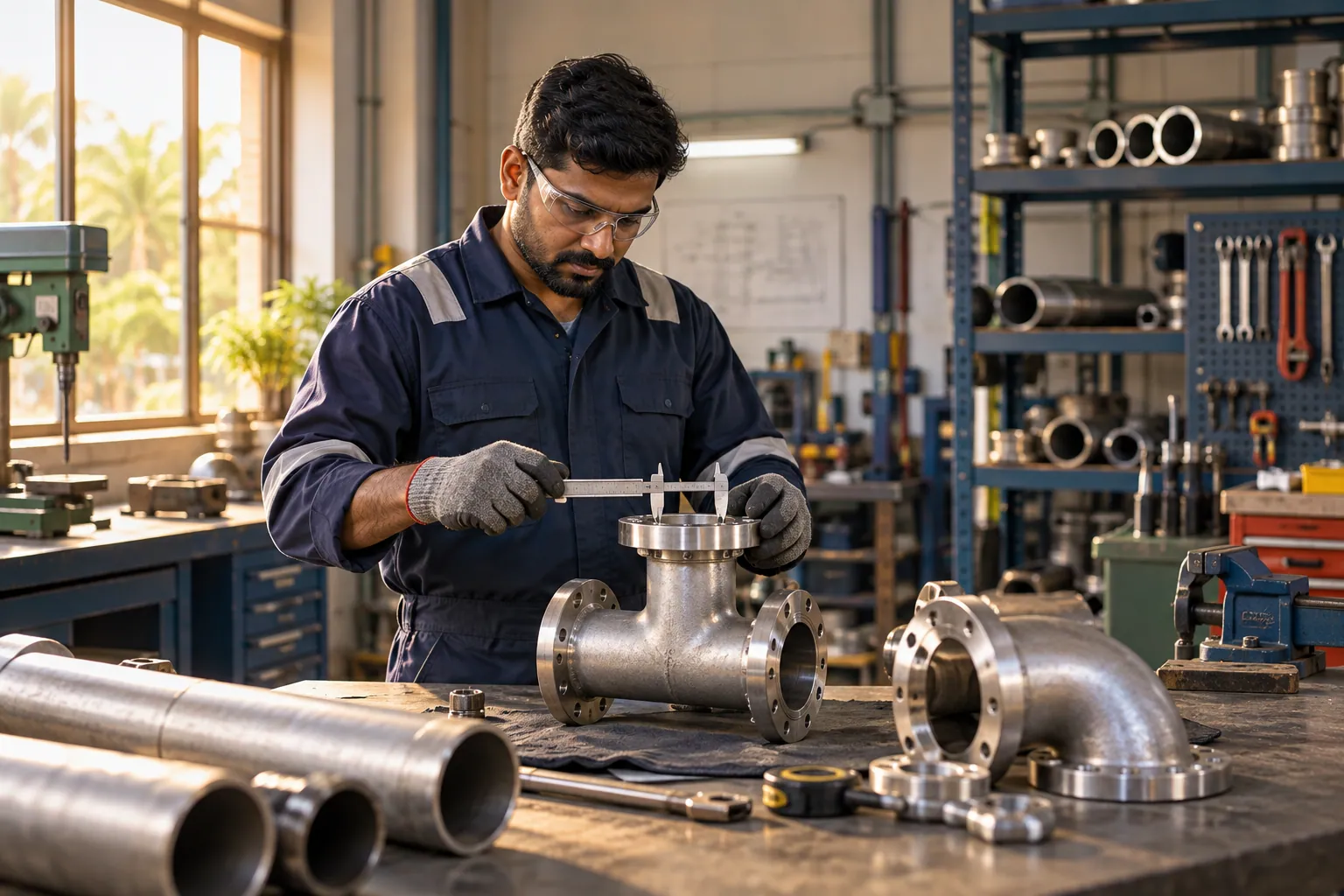
A pipe worker generally works with different types of pipes, fittings, tools, and equipment. The exact responsibilities depend on the industry and job level.
Typical duties may include:
- Measuring and cutting pipes according to specifications
- Joining pipes using appropriate methods and fittings
- Installing water, drainage, plumbing, or other pipe systems
- Checking pipes and connections for leaks or defects
- Repairing or replacing damaged sections
- Using hand tools and relevant equipment
- Reading basic measurements, drawings, or work instructions
- Maintaining tools and keeping the work area organized
- Following workplace health and safety procedures
Some positions are focused mainly on plumbing, while others involve industrial piping, construction, manufacturing, utilities, or maintenance.
For example, the National Qualification Register describes plumbing-related work as including the installation, maintenance, and repair of plumbing systems and fixtures, along with cutting and assembling pipes, tubes, fittings, and fixtures.
Types of Pipe-Related Jobs in India
The term "pipe worker" can cover several different occupations. Applicants should always check the exact job description before applying.
1. Pipe Fitter
Pipe fitters generally work with pipe systems used in construction, manufacturing, industrial facilities, or other technical environments. Their responsibilities can include measuring, cutting, fitting, aligning, and assembling pipes.
The DGT officially lists Pipe Fitter as a designated trade.
2. Plumber
Plumbers generally work with water supply, drainage, sanitary fittings, and plumbing systems in residential, commercial, or institutional settings. The National Qualification Register includes installation and maintenance of water supply and plumbing systems within the Plumber-General role.
3. Plumbing Assistant
A plumbing assistant generally supports a plumber with tasks such as preparing tools, clearing the work area, cutting or bending pipes, and assisting with installation and repair activities.
One National Qualification Register pathway lists 10th pass candidates with no prior experience among possible eligibility routes for an assistant-plumber qualification, although employers may set different requirements.
4. Maintenance Pipe Worker
Maintenance workers may inspect and repair existing pipe systems in buildings, factories, facilities, or other workplaces. The role can require practical experience and knowledge of maintenance procedures.
5. Industrial Pipe Worker
Industrial positions may involve more specialized piping systems and equipment. Such vacancies can have additional requirements related to technical training, experience, safety procedures, or the specific industry.
6. Apprenticeship Trainee
An apprenticeship can provide a combination of classroom learning and practical, on-the-job training. NSDC states that apprenticeships can provide practical experience while candidates receive training in a workplace.
Eligibility for Pipe Worker Jobs
There is no universal eligibility requirement for all pipe worker jobs in India. Requirements can change according to the employer, industry, location, job level, and recruitment notification.
Possible requirements include:
- Basic school education
- Class 8 or Class 10 qualification
- ITI training in a relevant trade
- National Trade Certificate (NTC)
- National Apprenticeship Certificate (NAC)
- Relevant vocational training
- Previous work experience
- Technical knowledge related to piping or plumbing
For example, different plumbing qualifications in the National Quali